

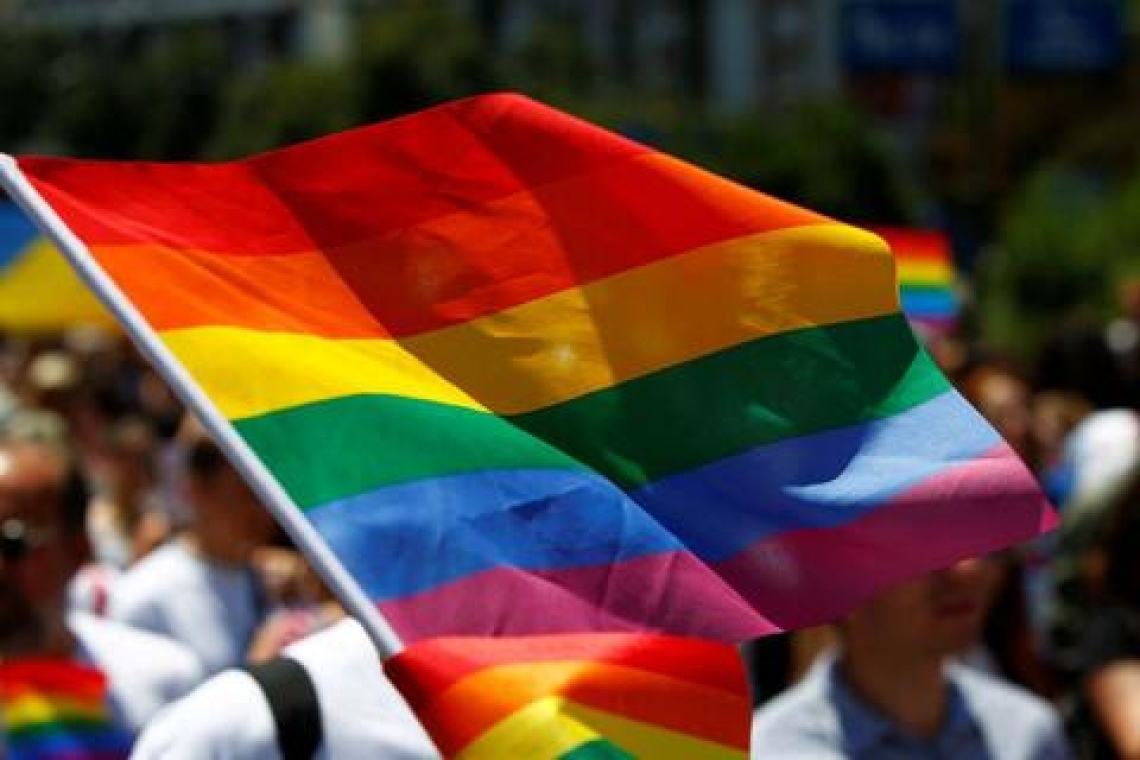
If enacted, provisions on “encouragement” and “promotion” included in the draft 12th Judicial Reform Package could pave the way for news reports on LGBTI+ rights to become the subject of criminal investigations.
ANKARA — Anti-LGBTI+ provisions that were debated during Turkey’s 10th and 11th Judicial Reform Packages but later withdrawn following public backlash have resurfaced in the draft 12th Judicial Reform Package.
The draft includes a range of proposed amendments to the Turkish Penal Code, from making the gender transition process more difficult to increasing penalties for the offense of “indecent acts.” It also introduces a vaguely worded offense of “publicly encouraging or praising attitudes and behaviors contrary to one’s biological sex at birth,” a provision that has sparked serious concerns over freedom of expression and press freedom.
If enacted, the measures would not only target the rights of LGBTI+ individuals but could also expose advocacy activities, news reporting, documentation efforts and academic research related to LGBTI+ rights to criminal sanctions.
The draft could place LGBTI+ associations and news platforms directly in the crosshairs, while increasing the risk that news reports concerning LGBTI+ issues could be investigated on allegations of “encouragement” or “promotion.”
How could the proposed measures affect journalistic activities? What legal risks could journalists covering LGBTI+ issues face? How would the threat of investigations into reporting on LGBTI+ matters affect the public’s right to access information? And what would the draft mean in terms of Turkey’s Constitution and international human rights standards?
“The result would be that rights violations against LGBTI+ people become invisible,” she said.
Karataş added that journalists have increasingly come under pressure since the enactment of Turkey’s disinformation law and other censorship-related regulations introduced in recent years. She emphasized that judicial reform packages have a direct impact not only on press freedom but also on the public’s right to access information.
“The public’s right to access information would also be directly affected”
Karataş said the grip of censorship tightens with each new regulation and added:
“When journalists begin to hesitate to report on certain topics, or when news stories are produced under the threat of investigation, the public’s right to access information is also directly affected. When citizens’ access to information about rights violations, discrimination or matters of public debate is restricted, their right to obtain information is undermined as well. For this reason, these legislative packages affect not just one segment of society but the fundamental rights of all citizens.”
Warning that the proposed measures could lead to greater censorship and a more restricted media environment, Karataş said the draft would also have particular consequences for LGBTI+ journalists.
She noted that LGBTI+ journalists could find themselves having to defend their own existence and right to work, adding:
“If this package is enacted, journalists reporting on LGBTI+ rights could effectively become unable to practice journalism.”
“Vaguely worded provisions would amount to directly targeting LGBTI+ journalism”
Kerem Dikmen, a lawyer and Human Rights Program Coordinator at Kaos GL Association, said censorship and self-censorship in the media have become more visible since Turkey’s disinformation law took effect. He warned that the draft provision on the “encouragement and promotion of behaviors contrary to one’s biological sex” could produce similar consequences.
“Such a vaguely worded provision could pave the way for any news report related to LGBTI+ people to be interpreted as ‘encouragement’ or ‘promotion,’” Dikmen said. “That would amount to directly targeting LGBTI+ journalism.”
Dikmen recalled that journalistic activities have previously been criminalized through anti-terror legislation and said a similar risk could emerge for journalists and media organizations working on LGBTI+ issues.
“If this judicial reform package becomes law, a risk of criminalization could also arise for journalists and media outlets working in the field of LGBTI+ rights,” he said.
Dikmen also argued that the draft raises significant legal concerns.
“The provisions included in the draft are compatible neither with the fundamental rights and freedoms guaranteed by the Constitution nor with the international human rights standards to which Turkey is a party,” he said.