

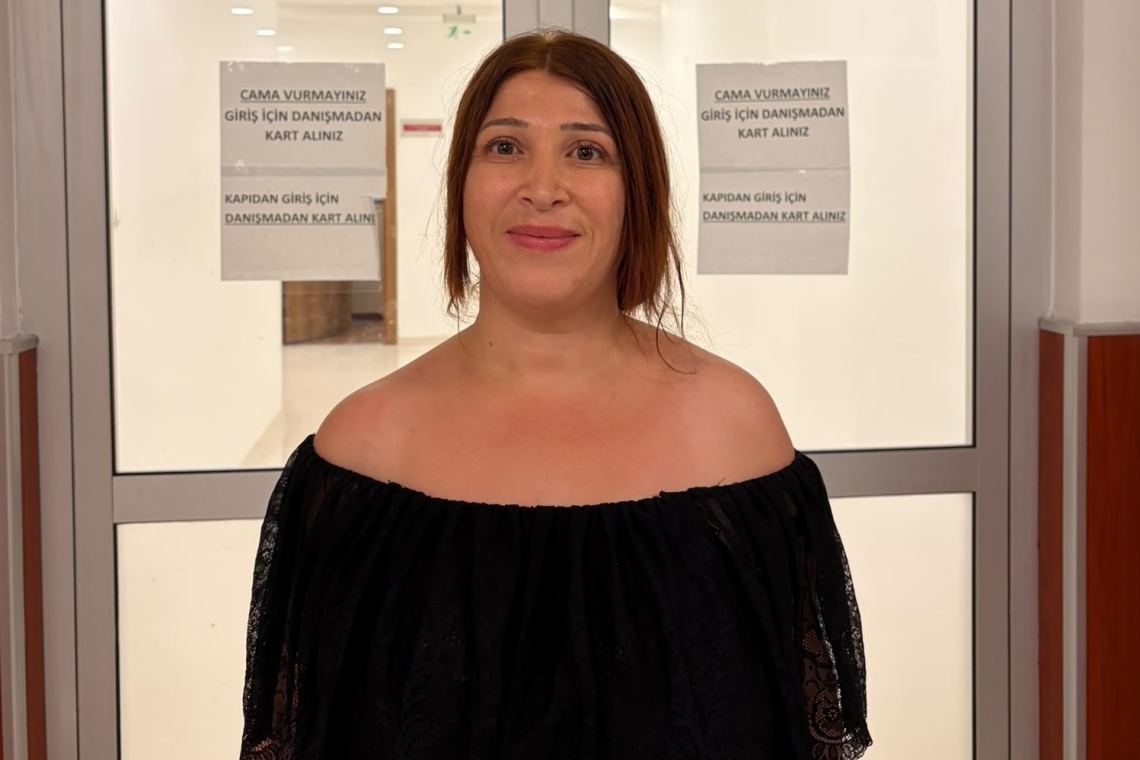
Despite the ECtHR’s ruling finding a violation, journalist Burcu Özkaya Günaydın was not acquitted; the Hatay 2nd High Criminal Court dismissed the case on the grounds that the five-year supervision period had expired.
HATAY, Turkey — The final hearing in the retrial of earthquake survivor and journalist Burcu Özkaya Günaydın, who was prosecuted on a charge of “making propaganda for a terrorist organization” over social media posts she made during Turkey’s Operation Peace Spring in northern Syria, was held at the Hatay 2nd High Criminal Court.
Reconsidering the case in line with a European Court of Human Rights (ECtHR) ruling that found a rights violation, the court panel did not acquit Özkaya Günaydın, instead ruling to dismiss the case on the grounds that the five-year supervision period had expired.
Case reopened following ECtHR ruling
The proceedings, which had continued since Özkaya Günaydın was detained in October 2019 and ended with a decision to defer the announcement of the verdict (HAGB), were reopened following the European Court of Human Rights’ (ECtHR) Oct. 14, 2025, ruling in Parlas and Others v. Turkey.
The ECtHR ruled that the decision against Özkaya Günaydın violated her right to freedom of expression as guaranteed under Article 10 of the European Convention on Human Rights (ECHR).
Journalist Burcu Özkaya Günaydın: ‘My posts were journalistic activity’
Journalist Burcu Özkaya Günaydın, speaking at the hearing, said in her defense statement:
“I am a freelance journalist living in Hatay. I work as a freelancer for national and international media outlets. In 2019, I was actively working as a journalist along the Syrian border. I also covered Operation Peace Spring from the border in my capacity as a journalist. I opened a Twitter account to learn about developments on the Syrian side of the border from accounts posting from Syria. The fact that I had 30 followers at the time is also proof of this. I was trying to gather information by looking at posts about Syria on Twitter.
“There was footage of clashes in a video that appeared to have been filmed on the Syrian side. From a journalistic standpoint, I shared the video by retweeting it without adding any text or commentary. My post falls within the scope of journalism, and I do not accept that it should be considered propaganda for any organization.
“Five years have passed since the decision to defer the announcement of the verdict in relation to the sentence imposed on me, and that period has ended. After I was sentenced, I was required to report and sign in once a week for about a year. This period coincided with the pandemic. I suffered rights violations because I had to leave home to sign in at times when I was otherwise required to stay indoors, or because I could not attend professional events and assignments outside the province after being invited to them due to the requirement that I sign in.
“The post I made falls within the scope of journalistic activity and freedom of expression. For this reason, I object to the sentence imposed on me and request my acquittal.”
‘Elements of the offense were not established; we request acquittal’
The Media and Law Studies Association (MLSA) lawyer representing Özkaya Günaydın said in the defense statement:
“In its ruling dated Oct. 14, 2025, the European Court of Human Rights found a violation of Article 10 of the European Convention on Human Rights, leading to the reopening of the proceedings. The ECtHR found that the conviction and the decision to defer the announcement of the verdict issued against our client over her social media posts constituted an interference with freedom of expression and that this interference violated Article 10 of the Convention.
“As for the merits of the case, the previous ruling accepted that the posts dated Oct. 8 and 9, 2019, did not constitute propaganda, and the conviction was based essentially on the post dated Oct. 10, 2019. However, that post did not consist of our client’s own words. As a journalist working in the border region in Hatay, our client retweeted another user’s post because the footage it contained from the conflict zone was newsworthy.
“Under Article 7/2 of Turkey’s Anti-Terror Law, punishable propaganda requires that an organization’s methods involving force, violence or threats be legitimized, praised or encouraged. In the present case, it has not been demonstrated which words or actions by our client satisfied these elements.
“For this reason, in order to remedy the consequences of the violation identified by the ECtHR, we request that the previous judgment be annulled and that our client be acquitted because the elements of the alleged offense were not established. If the court takes a different view, we request that the case be dismissed. If the announcement of the verdict is deferred once again, the same process will be repeated and the infringement of her rights will be compounded.”
Case dismissed instead of acquittal
After a recess, the panel of the Hatay 2nd High Criminal Court announced its decision and, despite the ECtHR ruling, did not acquit Özkaya Günaydın. The court instead dismissed the case on the grounds that the five-year supervision period had expired. The decision can be appealed to a regional appeals court.