

- An Istanbul prosecutor has sought a prison sentence for comedian Tuba Özlem Ulu over a joke in her stand-up performance about Ottoman Sultan Suleiman the Magnificent and his wife, Hürrem Sultan.
- According to the indictment, Ulu's remark, "Hürrem was Suleiman's f**k buddy. The woman pushed for the marriage," was deemed "sexist," "demeaning to women," and a threat to public peace. Prosecutors are seeking her conviction on that basis.
Semra Pelek
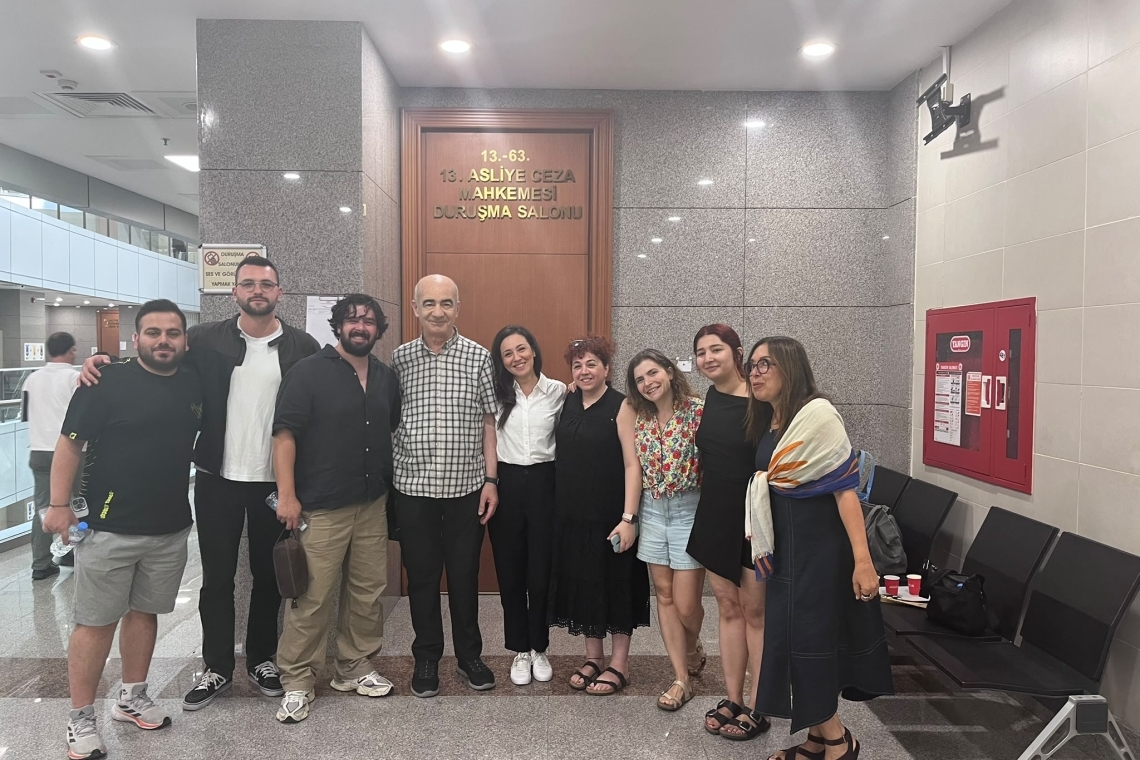
The second hearing in the trial of comedian Tuba Özlem Ulu, who was detained over a joke about Ottoman Sultan Suleiman the Magnificent and later charged with "inciting hatred and hostility among the public" under Article 216 of the Turkish Penal Code, was held at the Istanbul 13th Criminal Court of First Instance.
The hearing began 11 minutes later than scheduled. The judge and prosecutor warned journalists, trial observers, and supporters in attendance that legal action would be taken if photographs were taken or audio recordings made during the proceedings.
Presenting his opinion on the merits, the prosecutor assessed remarks Ulu made during her stand-up performance on April 9, 2026. He argued that her reference to "f**k buddy"—described in the opinion as referring to people who have sexual relations without an emotional bond or romantic relationship—demeaned women as a gender and was capable of disrupting public peace, warranting a conviction.
The prosecutor's opinion also argued that Ulu's remark, "The woman pushed for the marriage," implied that a woman pressured a man into marriage for personal gain and achieved her objective through a sexist approach rather than through her personality or character. It contended that the statement amounted to a sexually degrading comment about the female body and was capable of disturbing public peace. The prosecutor requested that the court apply Articles 216/2, 53, and 63/1 of the Turkish Penal Code.
The opinion cited provisions of the Turkish Constitution and the European Convention on Human Rights guaranteeing freedom of expression, while arguing that the right is not unlimited. On that basis, the prosecutor maintained that Ulu's remarks constituted a sexually degrading expression directed at women through references to the female body and therefore met the legal elements of the offense. He argued that the statements could not be considered protected speech under freedom of expression and asked the court to convict Ulu.
In her defense statement, Ulu repeated her earlier testimony and denied the charge.
"As a comedian in Turkey, I've touched on many subjects. I never intended to offend anyone or make derogatory remarks about anyone's values," she told the court, requesting her acquittal.
Ulu's lawyer, Alp Eren Şermet, argued that the remarks fell within the boundaries of satire and contained no element of insult or incitement to hatred or hostility. He asked the court to acquit his client.
Şermet also argued that the legal requirement for a complaint had not been met with respect to the additional defense under Article 130 of the Turkish Penal Code and requested that the case be dismissed on that basis.
Lawyers Jiyan Tosun and Mehmet Kartal said they joined the defense and would submit a detailed response to the prosecutor's opinion on the merits.
Attorney Uğur Can Demirci, chair of the Istanbul Bar Association's Culture and Arts Commission, attended the hearing as an observer.
Defense granted one week to respond
The defense asked the court for additional time to respond to the prosecutor's opinion on the merits, arguing that one week would not be sufficient.
The judge said the judicial recess was about to begin and that the court's September and October schedule was already full, adding that postponing the case until November would create scheduling difficulties. The court granted the defense one week to prepare its response and adjourned the hearing until July 14 at 11 a.m.
Background
Ulu was detained after clips from her stand-up performance circulated on social media and was later released under judicial control. Authorities initially said she was being investigated for "insulting historical, national and spiritual values."
The indictment was filed on April 13, four days after the performance.
Article 216/2 of the Turkish Penal Code criminalizes the public denigration of a segment of society based on characteristics including gender. For an offense to be established under the provision, the act must be deemed capable of disrupting public peace. The offense carries a prison sentence of between six months and one year.