

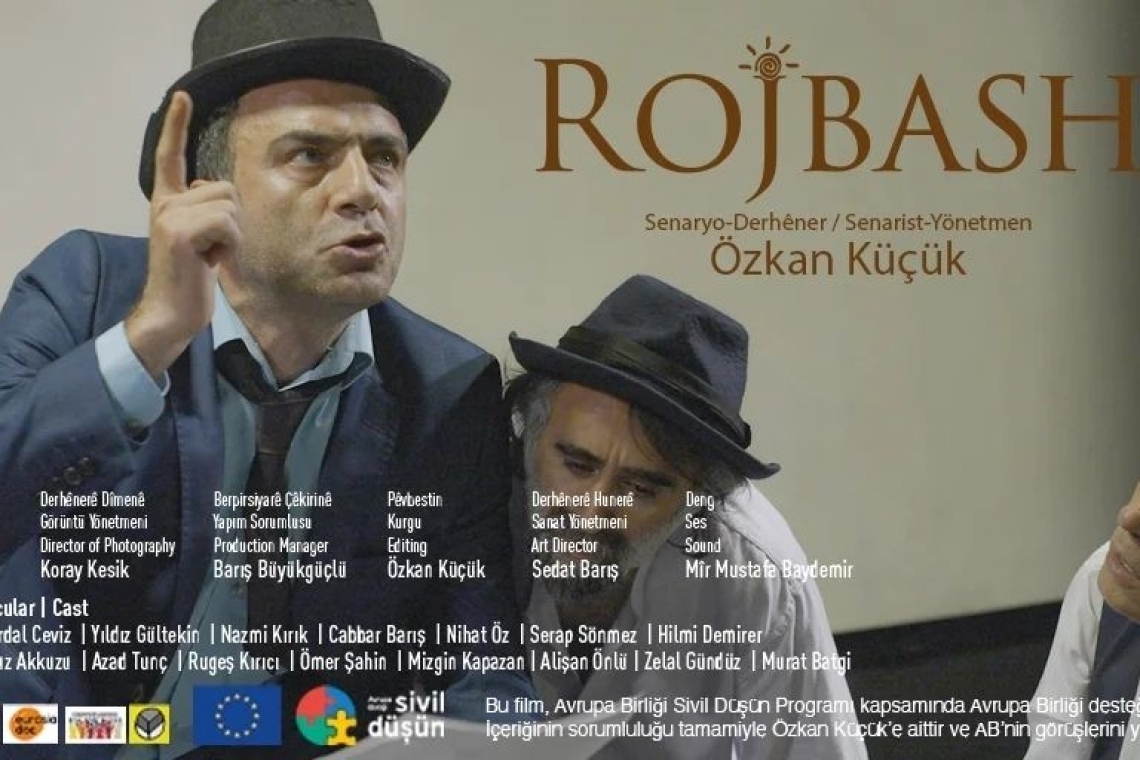
- Despite Ankara’s 3rd Administrative Court lifting the ban on the film Rojbash, the Ministry of Culture has taken the decision to the appellate court and requested a stay of execution.
- The Ankara Regional Administrative Court, meanwhile, has given 30 days for the defense statements; the process has been extended by at least one more month.
- Director Özkan Küçük said, “While the court is opening the path to freedom, the Ministry’s insistence on the ban is at the level of a scandal.”
MLSA – Although the Ministry of Culture and Tourism’s ban decision was lifted by the court, the legal process concerning the Kurdish-language film Rojbash continues. The Ministry’s move to take the decision to appeal and request a stay of execution has led to comments that efforts are being made to prevent the film from being released again.
In the lawsuit filed with the legal support of the Media and Law Studies Association (MLSA), Ankara’s 3rd Administrative Court had annulled the ban decision that stated the film was “not suitable for commercial circulation and screening,” finding it unlawful. The court emphasized that lighter measures were possible instead of a ban and issued a significant ruling in favor of freedom of expression.
However, following the decision, the parties went to appeal.
The MLSA Legal Unit applied to the Ankara Regional Administrative Court, objecting to the rejection of director Özkan Küçük’s claims for pecuniary and non-pecuniary damages and seeking their acceptance.
Ministry takes the decision to appeal
On the other hand, the defendant Ministry of Culture and Tourism also appealed the decision. The Ministry requested that the ruling of Ankara’s 3rd Administrative Court be overturned and that the case be dismissed entirely. It also requested a stay of execution of the decision.
In its appeal petition, the Ministry argued that the first-instance court’s decision was “a ruling made based on incomplete examination and investigation, without legal basis.”
It also objected to the expert report, arguing that the report was prepared mainly from the perspective of children and young people and did not contain a sufficient legal assessment in terms of constitutional principles and public order. The Ministry also stated that there was no expert specializing in cinema on the expert panel and that, therefore, the report was insufficient.
The Ministry justified its request for a stay of execution within the framework of public order and constitutional principles. In its petition, it argued that if the Ankara 3rd Administrative Court’s decision were implemented, a film deemed “objectionable in terms of public order and constitutional principles” by the Evaluation and Classification Board would be put into commercial circulation and screening.
For this reason, the petition requested the suspension of the execution of the annulment decision, the overturning of the ruling, and the complete dismissal of the case.
Court grants 30 days for defense statements
The 10th Administrative Litigation Chamber of the Ankara Regional Administrative Court, which is reviewing the file, has not yet made a decision on the merits. The chamber ruled that the request for a stay of execution would be examined after receiving the plaintiff’s defense statements. The court set the defense period at 30 days and notified the decision to the lawyers of the MLSA Legal Unit, who represent the plaintiff.
Despite the lifting of the ban on the film Rojbash, the defendant Ministry of Culture’s decision to go to appeal has prolonged the process. How the appeal process concludes will directly affect both the film’s release and the course of similar censorship cases.
Director Özkan Küçük: “The Ministry insists on banning”
Evaluating the Ministry’s appeal application, the film’s director Özkan Küçük criticized the Ministry for opposing the court’s decision lifting the ban. Küçük described the ruling of Ankara’s 3rd Administrative Court as “a development of historical importance emphasizing artistic freedom of expression,” while calling the Ministry’s appeal “a development at the level of a scandal.”
Küçük said, “While the court has opened the path to freedom with its impartial decision, the Ministry chooses to insist once again on banning.”
Referring to the Ministry’s emphasis on the authority of the Evaluation and Classification Board in its petition, Küçük said, “The only thing this board should do is classification.”
Stating that a film’s content may not align with administrators’ views, Küçük said, “You may consider the film objectionable in terms of constitutional principles, but the constitution guarantees our freedom of thought and expression.” Küçük added that with its appeal, the Ministry is “opening fundamental constitutional rights to debate.”
Saying that the process has worn them down again, Küçük added, “We will defend our claims for pecuniary and non-pecuniary damages more strongly.” Criticizing the approach toward a Kurdish-language film, Küçük said, “Rojbash will be free and will meet its audience.”
What happened?
In 2024, the Ministry of Culture and Tourism issued a decision that the Kurdish-language film Rojbash, directed by Özkan Küçük, was “not suitable for commercial circulation and screening.” With this decision, the film was effectively banned.
Following this, a lawsuit was filed with the legal support of the Media and Law Studies Association (MLSA). In its ruling in February, Ankara’s 3rd Administrative Court found the ban unlawful and annulled the decision. The court stated that lighter measures, such as classification, were possible instead of a ban.
An expert report submitted to the court during the proceedings also stated that the film did not contain violence or incitement to hatred and should be evaluated within the scope of artistic freedom of expression.
After the ruling, director Özkan Küçük said that the lifting of the ban was an important precedent not only for the film but also for future films to be made in Turkey. He also announced that the legal process regarding the rejection of his claims for pecuniary and non-pecuniary damages would continue.