
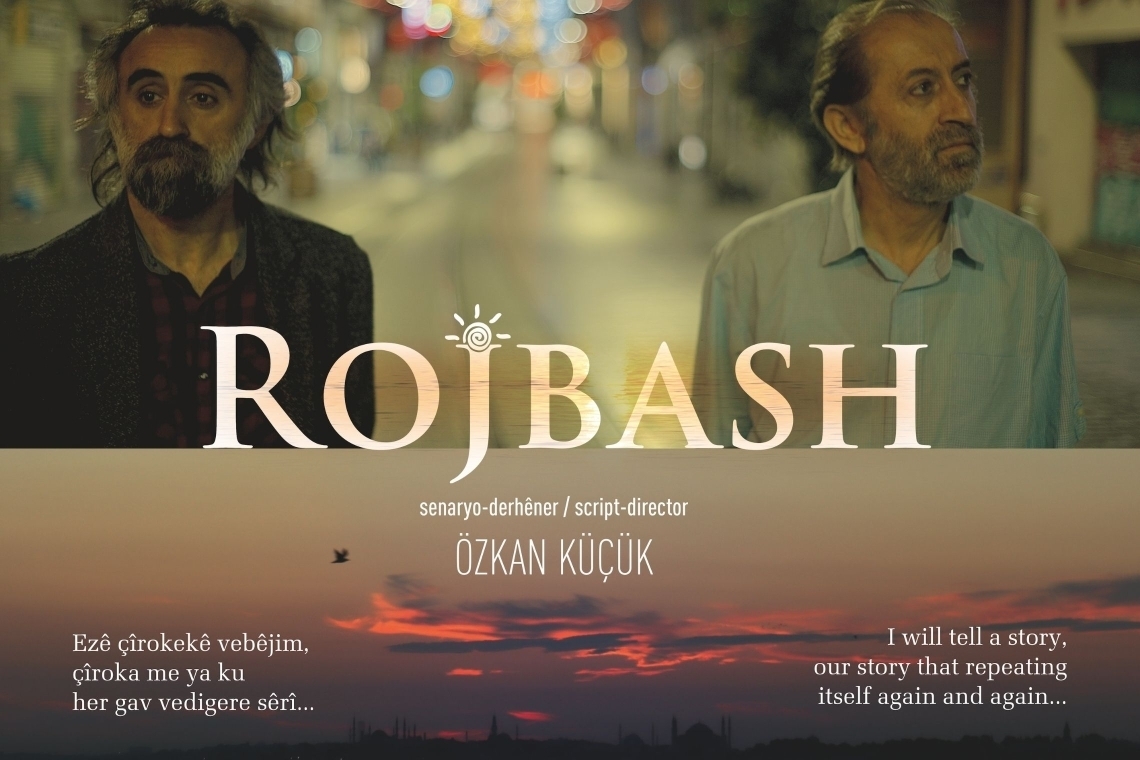
- MLSA lawyers submitted their defense statements to the Ankara Regional Administrative Court against the Ministry of Culture and Tourism’s request for a stay of execution regarding the decision that lifted the ban on the film Rojbash.
- In the defense, it was emphasized that suspending the decision would mean the film is effectively banned again, and that this would cause irreparable harm to freedom of expression and art.
MLSA – While the appeal application made by the Ministry of Culture and Tourism against the Ankara 3rd Administrative Court decision that lifted the ban on the film Rojbash continues, a new development occurred in the file. Lawyers from the Media and Law Studies Association (MLSA) Legal Unit submitted today their defense petition, prepared against the Ministry’s request for a stay of execution, to the 10th Administrative Litigation Chamber of the Ankara Regional Administrative Court.
In the petition submitted by MLSA, it was emphasized that the request for a stay of execution is not appropriate in legal terms, and its rejection was requested.
“Lighter measures are possible instead of banning”
In the defense, it was pointed out that the decision of the Ankara 3rd Administrative Court is based on a comprehensive judicial process. It was recalled that the court had an expert examination carried out, evaluated the objections of the parties, and ultimately ruled that the measure of “complete banning” is disproportionate.
In the petition, it was stated that the Ministry based its request for a stay of execution on abstract grounds such as “public order” and “constitutional principles,” but that these claims could not be concretized. It was stated that no clear and concrete danger requiring the complete banning of a cinematic work was put forward.
MLSA lawyers also pointed out that the essence of the discussion is the question of “ban or lighter measures,” emphasizing that the first-instance court demonstrated that alternative tools such as classification are possible.
“The harm that is difficult to compensate will arise for the film owner”
In the defense, it was pointed out that if a stay of execution decision is given, the actual harm will arise in terms of the film’s producer.
It was stated that the decision given about Rojbash amounts in practice to a ban, and that this situation prevents the film from meeting the audience in Turkey, stops festival and screening plans, and interrupts professional activities.
MLSA lawyers emphasized that in case of a stay of execution, the effect of the annulment decision will be suspended, and that this would mean the intervention in freedom of expression and art will continue throughout the appeal process. In the petition, attention was drawn to the fact that in the field of freedom of expression, “subsequent compensation is often not possible.”
In contrast, it was stated that the damage claims put forward by the Ministry are hypothetical, that risks related to public order were not put forward with concrete facts, and that lighter measures were not evaluated.
Compensation claims are also back on the agenda
In MLSA’s defense, not only the request for a stay of execution but also compensation claims were included.
It was stated that while rejecting the claim for pecuniary compensation, the first-instance court did not conduct sufficient examination, and it was emphasized that due to the nature of the film production process, not all damages may be demonstrated with invoices or documents. It was stated that the court gave a rejection decision without conducting the necessary research and expert examinations.
In the petition, it was stated that the pecuniary damage arises both from expenses in the production process and from loss of income due to the prevention of the film’s screening.
As for non-pecuniary compensation, it was emphasized that the ban decision is not only an administrative act, but also has the nature of a direct intervention in artistic freedom of expression. It was pointed out that expressions such as “provocation” and “separation” used about the film created a serious impact on the professional reputation of the producer.
MLSA lawyers requested the rejection of the Ministry of Culture and Tourism’s request for a stay of execution, the rejection of the appeal application on the merits and the approval of the annulment decision of the Ankara 3rd Administrative Court. They also requested the removal of the part of the first-instance court decision rejecting pecuniary and non-pecuniary compensation claims, the acceptance of the case in terms of compensation, and a ruling that pecuniary and non-pecuniary compensation be collected from the administration.
How will the process proceed?
It is expected that the 10th Administrative Litigation Chamber of the Ankara Regional Administrative Court will give its decision regarding the request for a stay of execution after evaluating the submitted defense.
The decision to be given by the court will be decisive in terms of whether the film Rojbash can be released in Turkey.